
When the lights snapped off across Arapahoe Community College’s Littleton (ACC) campus, the blustery morning of October 20, only a few months ago, panic rippled through the hallways and some classrooms.
Firefighters rushed in to free three people trapped between floors as staff ushered students outside and ACC sent rapid alerts canceling classes before 5 p.m.
That day’s scramble, part of rolling power shutoffs tied to extreme winds, showed how quickly campus life can be upended, and how much depends on communication, coordination, and care.
This semester, ACC’s students have faced more than flickering lights. A 43-day federal government shutdown froze Supplemental Nutrition Assistance Program (SNAP) benefits, leaving families, including college students, in uncertainty just as the holidays approached.
At the same time, the rise of generative Artificial Intelligence (AI) and Large Language Models (LLMs) reshapes classrooms, as faculty weigh innovation against academic integrity.
Together, these stressors test ACC’s systems and values. How does one keep learning on track, food on the table, and thinking skills alive in an algorithmic age?
Lisa Matye Edwards, Vice President of Student Affairs, and Samuel Haynes, Associate Vice President of Student Affairs, discuss how ACC responds to crises like those described above, via email correspondence.
ACC maintains an Emergency Management Operations Group (EMOG) that convenes during crises to assess risks and decide next steps.
“We practice by doing both drills and table‑top exercises to prepare for floods, active shooters, and train derailment with hazardous waste next to a college location,” said Matye Edwards.
Emergency communications go out via ACCAlert, while Student Affairs evaluates national events and calls in support accordingly.
Matye Edwards emphasized that improvement is an essential focus, “Always – we are always learning from recent events.”
Recent outages prompted a request for state funding for a backup generator to keep the main building elevators operating briefly during power outages, preventing a recurrence of trapped community members.
On the ground, coordination is broad. Haynes described a network that includes Campus Police, the Dean of Students, Facilities, Communications, Information Technology (IT), EMOG, and the Safety Committee.
These teams train, maintain protocols, and connect to local and state partners. When an incident hits, they act quickly.
“We evaluate what happened, our response, what we did well, and what we might improve on,” Haynes said.
The blackout made one thing clear: timely communication can make all the difference.
ACC issued mass texts, emails, and automated calls about the official closure a few hours after the outage.
Weather emergencies aren’t under ACC’s control, yet they are a constant test of judgment: how to avoid disrupting learning while recognizing that commutes and conditions vary widely across the service area.
If the blackout sparked anxiety for a day, the SNAP disruption stretched that stress for weeks, leaving students uncertain about their next meal.
The fall’s federal shutdown halted SNAP benefits for millions, including an estimated 1.1 million college students nationally. ACC’s Dean of Students reported a surge in food-pantry traffic as students worried about rent and groceries.
“The shutdown put my benefits on hold until Nov. 13, leaving my household struggling,” said student Jakeshia Johnson, who began receiving assistance in 2019.
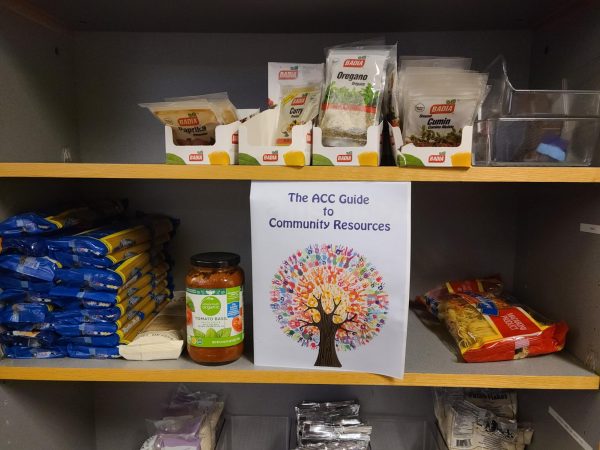
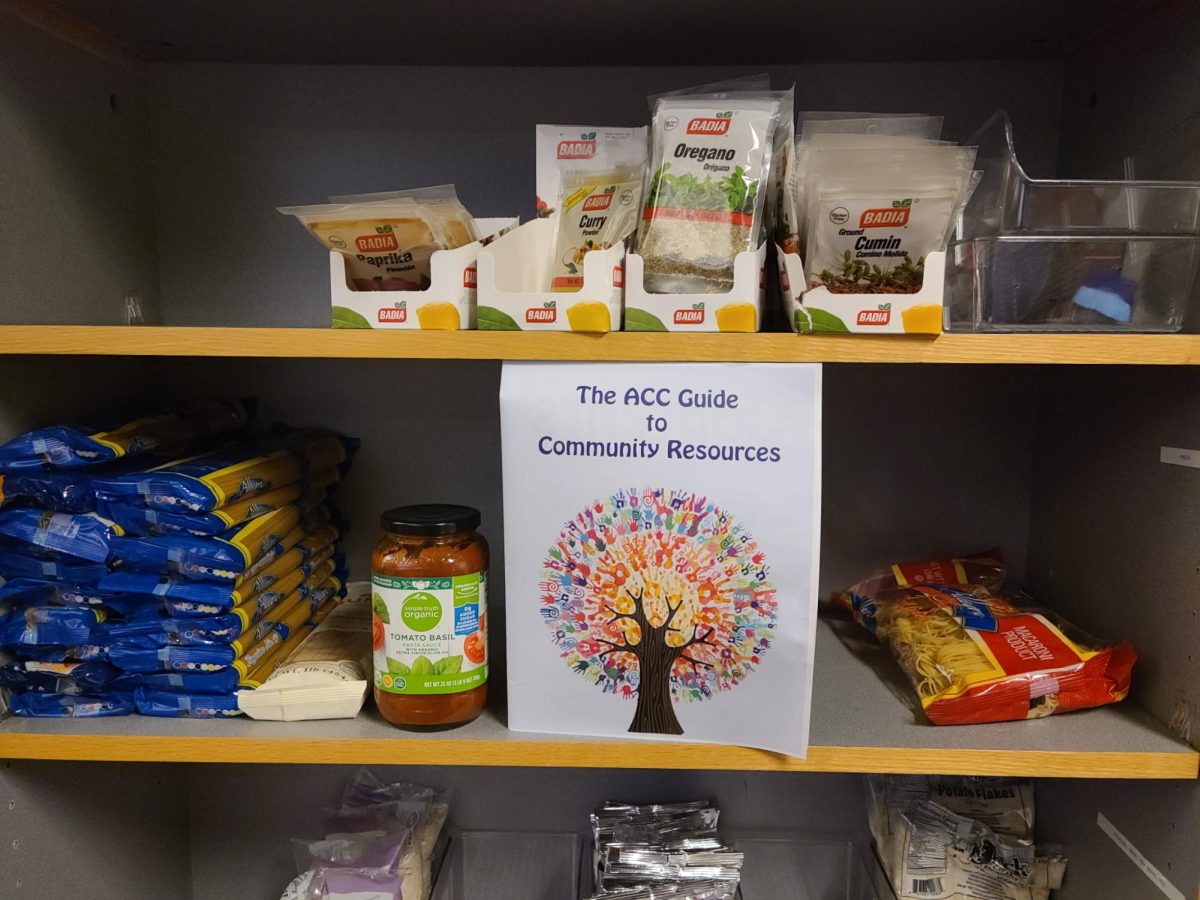
In response, ACC overstocked its pantry, promoted donations, and distributed emergency aid; community partners expanded support by providing free meals and waiving delivery fees.
Matye Edwards detailed how Student Affairs amplifies Basic Needs Services during crises: connecting students to counseling, the clothes closet, the on-campus food pantry, and even a mobile grocery pantry that visited this semester.
Earlier examples reveal that these issues have long shaped campus life. ACC staff have created reflection and community spaces after national tragedies, such as the 2016 Pulse Club shooting, giving students and employees room to process grief.
“We do our best to share out resources both in classes, on D2L, [and] remind faculty and instructors on ways they can help connect students,” Matye Edwards said, noting email updates from Student Affairs and posts in ACCAlert with resource lists.
Haynes added that outreach depends on students’ self-identifying needs in a diverse community. “Our student population is very diverse, so we are very dependent on students coming forward to let us know when a crisis has had a direct effect on them.”
Most referrals arrive through one of Student Affairs’ 13 offices: Dean of Students, Disability Accommodations Services (DAS), TRIO, Financial Aid, Advising, Records, Career Services, and Campus Police, to name a few, with wrap-around support tailored to individual circumstances.
If outages and shutdowns disrupt logistics, AI and LLMs challenge the learning process itself. To longtime ACC Professor Lance Rubin, when students bypass the effort of crafting their own prose, they lose the deeper learning that comes from the intellectual rigor and resilience forged through writing.
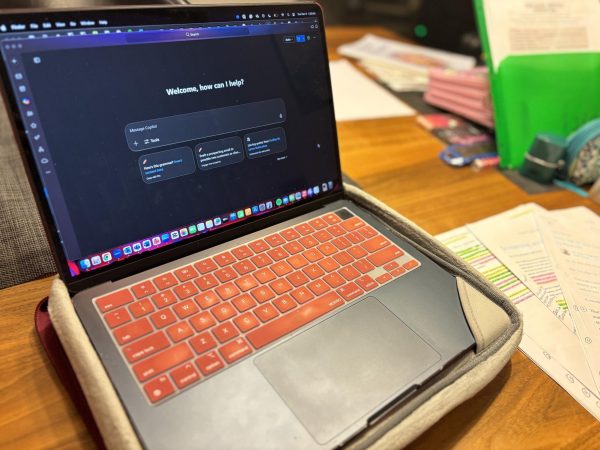
“Just do this yourself and succeed or fail or learn something on your own terms,” he said, rejecting the idea that community college coursework should be easier than four-year standards, “we should be doing no more and no less.”
Monica Fuglei, Concurrent Enrollment Faculty Chair and English professor, wrote in an email response that ACC works within the Colorado Community College System’s (CCCS) policy while honoring academic freedom.
Fuglei shared that the college’s Center for Innovation in Teaching and Learning (CITL) hosts training sessions and maintains AI support resources for faculty.
The English department recently held a book group to read John Warner’s More Than Words: How to Think About Writing in the Age of AI, and discussed strategies to implement in their course structures.
Fuglei’s own English composition course examines how easy AI usage can undermine long-term skill development. “My greatest fear,” she said, “is that we may collectively fall back to practices we know are inequitable in an effort to thwart AI usage.”
Instead, she advocates active, hands-on learning and scaffolded activities designed so that humans, not algorithms, bear the burden of analysis and “understand how and why their minds matter.”
Fuglei also flagged “mental offloading” as a deeper hazard. “When we ask a machine to do our work for us, we fail to exercise and work our minds.”
The opportunity, in her view, is to teach responsible, ethical AI use while rethinking course learning outcomes across disciplines. Not every class engages AI the same way.
Fuglei explains that the subject matter and the instructor’s expertise should drive whether and how tools are integrated, based on the academic freedom of the instructor’s discretion.
The outage story similarly highlighted the importance of clear, credible information. Students like Sabrina C., who used the on-site support available in the DAS office, felt anxious due to the lack of immediate communication.
In all cases, whether it regards intellectual freedom or physical safety, the common thread is communication: the correct details, at the right time, from trusted sources.
ACC’s playbook blends preparation, autonomy, and reflection. Emergency drills led by EMOG for worst-case scenarios; Student Affairs scales resources and partnerships; faculty adapt pedagogy with attention to equity and rigor.
The college’s challenge is to keep these systems responsive without calcifying into a ‘one‑size‑fits‑all rule,’ especially as AI evolves and emergencies range from irregular weather to unforeseen crises.
Rubin doesn’t want students set up for failure; Fuglei doesn’t want inequitable guardrails; Haynes and Matye Edwards don’t want gaps in the safety net.
The shared aim is resilient learning: courses that demand thought, campuses that protect community, and a culture that helps students navigate intellectual choices and complex circumstances.
Suppose good writing is, as Fuglei quotes legendary journalist Ambrose Bierce, “essentially, clear thinking, made visible.”
The semester’s events highlight ongoing tensions between adaptation and tradition, raising questions about how colleges like ACC can sustain learning amid uncertainty and change.
For now, the conversation continues, between faculty and students, policy and practice, on what resilience in education truly means, and how it will shape the future of learning.
Download the ACC Alert app for official safety alerts from campus officials.
To offer a suggestion, submit to the Digital Suggestion Box.